For many of us in the United States, military service touches our lives, whether through family, friends, or our communities. Our veterans have sacrificed so much and genuinely deserve our heartfelt gratitude, compassion, and care. Sadly, many of these brave individuals feel isolated and face daily challenges with tasks most of us take for granted, like preparing meals, keeping up with household chores, or managing their own wellbeing.
As veterans grow older, it becomes more important to provide the support they need to remain independent at home. After years spent in service to our country, these individuals deserve dignity, comfort, and attentive care. By investing in the health of our senior veterans, we help them enjoy a higher quality of life and honor their commitment to us all.
The Department of Veterans Affairs (VA) recognizes these needs and provides veterans home care funding in Boring, OR, to assist servicepeople and their loved ones. What many families don't realize is that long-term care options - including in-home care - are included in programs like ameriCARE's Veteran CARE services.
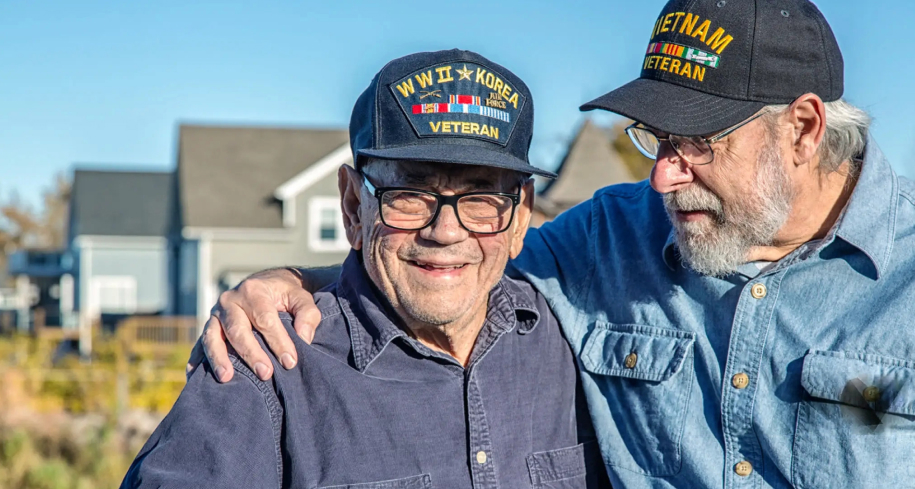

Today, many of our veterans are vulnerable to a variety of issues that can impact their quality of life. However, through our Veteran CARE services, we're able to provide customized, compassionate care that addresses those issues and provides families like yours with peace of mind. Whether they're returning from combat with new health challenges or simply need an extra hand throughout the day as they age, our team is here to help.
Our agency owners are dedicated to guiding veterans through the process of accessing their benefits and understanding their eligibility. This important service, available at many of our franchise locations, empowers veterans to overcome the often confusing world of entitlements. With empathy and expertise, we strive to honor veterans by delivering personalized care and knowledgeable guidance, supporting them in living fuller, more independent lives.

The VA offers valuable benefits that include coverage for home health aide and homemaker services to veterans who require help with daily living activities. Through collaboration with one of our care partners, we learned that, out of more than 8 million veterans in the VA healthcare system aged 65 and older, only about 150,000 are utilizing this support. This means fewer than 2 percent of eligible veterans are getting the care they've rightfully earned. In some cases, such as with "Aid and Attendance," surviving spouses of veterans may also be eligible for benefits.
ameriCARE is committed to linking veterans and seniors nationwide with compassionate, highly trained caregivers from their own communities. We're proud to say that our mission goes beyond care - in fact, we're happy to help guide veterans and their families through the complexities of the VA system, offering hands-on support during the entire approval process. Many of our franchise owners team members are veterans themselves, who are dedicated to ensuring you or your loved one receives reliable, personalized care at home.
Regardless of how long they served, many military veterans leave service with a litany of health issues - both mental and physical. Some of the most common problems that older veterans face after leaving the military include
Research from the National Center for PTSD reveals that as many as 23% of veterans will experience post-traumatic stress disorder during their lifetime. For some, symptoms may not surface until later years, often following retirement. Notably, the development or worsening of PTSD in older adults has been linked to an increased risk of dementia, suggesting a complex relationship between trauma and cognitive decline as veterans age.
A recent study featured in the National Library of Medicine examined the prevalence of malnutrition among older veterans receiving home-based primary care. The researchers discovered that 15% of these individuals were classified as malnourished, highlighting a significant health concern within this population. Malnutrition in elderly veterans can lead to a range of complications, such as weakened immune response, slower recovery from illness, and increased risk of hospitalization. These issues underscore the need for veterans home care funding in Boring, OR that helps seniors with eating and nutrition challenges.
Studies show that older veterans face a 25% higher likelihood of reporting multiple chronic health issues compared to their nonveteran peers. This trend underscores the unique health challenges veterans may encounter as they age, which often stem from service-related injuries, stress, and more.
Veterans often carry the weight of their service, having endured challenging circumstances and shouldered responsibility for the security of others. As they grow older, preserving their sense of independence becomes deeply intertwined with their mental and emotional health. For many, shifting from self-reliance to accepting help with everyday activities can be a significant adjustment.
A skilled caregiver who understands veterans' unique backgrounds can make this transition smoother. Building trust through respect for personal boundaries, clear communication, and trauma-informed care is essential to fostering a strong partnership between veterans and their in-home caregivers.
Many ameriCARE locations provide their caregivers with specialized training to better support our veterans as veteran cases can be complex and deserve tailored care.

Our caregivers offer support with meal preparation, grocery shopping, and managing dietary needs. They also encourage healthy habits and lifestyle choices, ensuring you or your loved one receives personalized nutrition and wellness guidance.
Tasks like bathing, using the restroom, getting dressed, and maintaining oral hygiene can become challenging because of aging or ongoing health conditions. Our dedicated caregivers are specially trained to assist with these personal routines and always prioritize the veteran's comfort, privacy, and self-esteem.
A tidy living space does more than promote good hygiene. It fosters a sense of comfort, security, and overall wellbeing. Our caregivers help with everyday household tasks, making sure your home remains a safe, inviting, and organized environment.
When driving becomes a challenge, whether for you or a veteran family member, our caregivers step in to help. They can handle errands such as grocery shopping, picking up prescriptions, ensuring appointments are kept, and providing reliable support for many other daily needs.
In-home caregivers from ameriCARE are dedicated to supporting your loved one's mobility and safety. From accompanying them on short walks to guiding them through physical therapy routines, we help promote regular movement and keep them engaged in activities that support their health and independence.
Our caregivers foster engagement by offering gentle support and uplifting encouragement. We create opportunities for veterans to participate in enriching activities, make social connections, and develop genuine bonds with their in-home caregivers.
We can accompany you or the older veteran in your life to medical appointments. We can also help relay any information or instructions provided by doctors.
Coping with the effects of aging, disability, or recovery from injury often involves juggling multiple medications with specific timing and dosages. Our caregivers can help ensure that you or your veteran loved one receives the correct medications at the right times, providing peace of mind while supporting overall health.
Our comprehensive care extends to beloved pets as well. We can assist with daily dog walks, feeding routines, arranging transportation for vet visits, and maintaining pet hygiene. By helping with day-to-day chores like pet care, we help enhance the wellbeing of senior veterans and their animal companions.
While many veterans have a primary care physician or a home health care professional, they may still need a real human connection beyond medical care. Veteran-funded home care can help you or your loved one maintain a more balanced life, one visit at a time. That's where ameriCARE comes in. We work tirelessly to connect dedicated, welltrained, and dependable caregivers to veterans across the United States.
If you're looking for a locally-owned home care company that provides veterans with personalized support, Request More Info today. It would be our honor to help you and your family navigate the VA and to act as your liaison throughout the benefit approval process.


Ready to get started on your journey with ameriCARE? Request More Info today to schedule your consultation and learn more information about how we can assist you or your senior loved one.
The 98th Academy Awards ceremony drew sharp criticism from viewers who called the show uninspired and poorly paced."This was a boring ceremony, overall very predictable and nothing new," one viewer posted on X during Sunday's show.Another criticized the hosting, saying, "This Oscars is sorta a flop idk. Conan flop, awkward jokes from presenters, ugly a** stage (yeah I said it), only saving this night is a Sinners Best Picture I'm not playing." It comes after the Oscars red carpet gets political as Hollywood ...
The 98th Academy Awards ceremony drew sharp criticism from viewers who called the show uninspired and poorly paced.
"This was a boring ceremony, overall very predictable and nothing new," one viewer posted on X during Sunday's show.
Another criticized the hosting, saying, "This Oscars is sorta a flop idk. Conan flop, awkward jokes from presenters, ugly a** stage (yeah I said it), only saving this night is a Sinners Best Picture I'm not playing." It comes after the Oscars red carpet gets political as Hollywood stars wear anti-ICE pins.
Winners found their remarks truncated as the show ran long, while host Conan O'Brien's pre-recorded segments consumed substantial airtime.
"The Oscars cutting off that speech for Golden to make room for more overlong presenter bits that land with a thud… booooooo," wrote one viewer.
Others noted the irony of truncating winners.
"If Conan's whole awkward opening was cut, we wouldn't be cutting people off," one person posted, while another sarcastically added: "Nooo, you don't get it, those very unfunny 10-minute skits are so much more important, we need time for those!"
A presenter's own joke underscored the problem.
"The fact that one of the intro people had a skit about being played off like a minute later was salt in the wound too," noted another viewer, questioning the Academy's priorities.
"Why is the academy adding categories when they can't even allow enough time and respect to the pre-existing categories? It makes no sense."
Presenter Kumail Nanjiani sparked separate outrage with an offensive joke during the Best Live Action Short Film category.
He swapped "Schindler's List" for "Schindler Post It" before announcing the winners.
"Can't say that Schindler's List joke was uh in any good taste," one X user wrote.
Another noted the awkward moment, "At the #Oscars, they just made an offensive joke by swapping Schindler's List for #SchindlerPostIt, and the translator didn't translate it; she caught on instantly and just went silent during that part. Did you notice it?"
The broadcast ended with O'Brien being told he would be "host for life" before being replaced by content creator Mr. Beast in a closing sketch that fell apartment with many viewers.
As we kick off a new year, many have asked for my predictions around privacy, especially as organizations' use of AI and cloud-based data processing have skyrocketed of late. My answer centers on what I believe will be a huge change in how privacy and confidential data is perceived.Public blockchains have long-promised transparency and trust, but their openness has also made them impractical for real-world applications like payroll, identity, and institutional finance; a dilemma I like to call the “transparency paradox.”...
As we kick off a new year, many have asked for my predictions around privacy, especially as organizations' use of AI and cloud-based data processing have skyrocketed of late. My answer centers on what I believe will be a huge change in how privacy and confidential data is perceived.
Public blockchains have long-promised transparency and trust, but their openness has also made them impractical for real-world applications like payroll, identity, and institutional finance; a dilemma I like to call the “transparency paradox.”
Over the following year, however, this trade-off - which I believe to be the single biggest barrier to mainstream adoption - will begin to be solved, and in turn will move confidentiality from a specialist topic to a board-level requirement.
Article continues below
When it comes to why I believe this shift will happen this year, and not just ‘sometime in the future’, there are many pieces at play. But first off is the tech. Recent, yet significant advances in Fully Homomorphic Encryption (FHE) now finally make confidential blockchains practical at scale.
By allowing computations on encrypted data without exposing sensitive information, we’re effectively seeing the blockchain equivalent of HTTPS, or “HTTPZ”, now materialize.
However, while the tech being ready is certainly necessary, it’s not sufficient on its own. What flips privacy in 2026 is the convergence of several forces at once:
AI tools are moving from experimentation to production: In 2024–2025, many AI deployments were still pilots or limited-scope tools. Now in 2026, AI is already embedded into core workflows, including pricing, decisioning, R&D, legal, healthcare and finance. Once AI touches core IP and regulated data, privacy stops being optional.
Boards becoming directly accountable for AI risk: AI governance is moving from abstract policy to fiduciary responsibility. High-profile failures—data leaks, model inversion attacks, regulatory enforcement, or AI misuse scandals—will act as forcing events. Boards won’t ask “is privacy nice to have?” but “can we prove data never leaked?”
Large buyers resetting procurement standards: As a few major enterprises and public-sector actors set privacy-preserving architectures as default requirements, the market will tip. This is how security certifications and cloud standards became mandatory. Once a handful of large players demand it, the rest of the ecosystem follows quickly.
Competitive pressure, not regulation alone: Importantly, this won’t be driven only by regulation. Companies will see competitors moving faster, accessing better data, and closing deals they can’t. Privacy becomes a revenue enabler, not just a risk control.
That’s why 2026 matters: it’s the point where expectations catch up with capability, and where the cost of not having privacy-by-design becomes visible, measurable, and strategic. But, not all will benefit.
The parts of the ecosystem most likely to misread this shift are not the obvious “privacy-hostile” actors, but those who believe they are already doing enough.
This includes platform-led companies that conflate openness with trust. Some players - especially in AI and data platforms - will continue to assume that transparency, open weights, or open APIs are sufficient to generate trust.
They’ll underestimate how quickly customers are learning to distinguish inspectability from confidentiality. Openness can help auditability, but it does nothing to protect sensitive inputs once data is shared. In some cases, it actively destroys privacy.
These companies will be surprised when enterprise buyers push back, not on model quality, but on data exposure risk.
Equally, companies that assume privacy can be retrofitted - treating it as an architectural “layer” they can add later through policy, access controls, or contractual guarantees - will likely find themselves locked out of higher-value use cases (regulated data, cross-entity collaboration, sensitive IP) simply because their foundations aren’t credible.
This in fact mirrors how security was once treated (and still is in many industries). The mistake is that confidential computing, encrypted ML, and privacy-preserving inference fundamentally shape system design. Retrofitting privacy later is expensive, brittle, and often incomplete.
Any vendors who misread today’s relative quiet as lack of demand are too at risk of being left behind. In reality, privacy is often suppressed by demand: buyers don’t ask for what they assume is impossible. As soon as viable solutions exist, expectations reset extremely quickly.
We’ve seen this pattern with cloud security, zero trust, and now AI governance. So, by the time demand is explicit, late movers will already be disqualified.
For those that do take privacy seriously early doors and build it into their products from day one, I see a different story unfolding.
For them, they’ll have access to richer, more sensitive, higher-signal data because customers trust them with it, while others will be stuck training and operating on thinner, sanitized, or synthetic datasets.
They’ll also benefit from speed of deployment, especially in sensitive environments, thanks to fewer legal reviews, bespoke controls, and internal vetoes. When this happens, time-to-value becomes a real differentiator.
Finally, there’ll be a shift in the depth of integration and collaboration, and that’s down to the fact that Privacy-preserving systems unlock collaboration across organizational boundaries (partners, suppliers, jurisdictions) that was previously impossible. This won’t just improve margins, but will drastically expand addressable markets.
This article was produced as part of TechRadarPro's Expert Insights channel where we feature the best and brightest minds in the technology industry today. The views expressed here are those of the author and are not necessarily those of TechRadarPro or Future plc. If you are interested in contributing find out more here:
Monty Don loves these harbingers of spring, and I’m beginning to think he is on to somethinghen I was a child I was always mystified by the walks around the garden that my father and grandfather would undertake shortly after the latter arrived to visit. I’d see them as I was playing outside, or through the window from inside, and be baffled. What could they possibly be looking at?Fast-forward three decades and I’m the one pinching my mum’s clogs to inspect my parents’ dinky and beautifully appointe...
Monty Don loves these harbingers of spring, and I’m beginning to think he is on to something
hen I was a child I was always mystified by the walks around the garden that my father and grandfather would undertake shortly after the latter arrived to visit. I’d see them as I was playing outside, or through the window from inside, and be baffled. What could they possibly be looking at?
Fast-forward three decades and I’m the one pinching my mum’s clogs to inspect my parents’ dinky and beautifully appointed garden. My dad’s complaining about the hellebores, which haven’t naturalised as well as in the garden I used to watch him walk his father around. It’s something else that catches my eye: the bold, bright green crown of leaves of a primrose (Primula vulgaris to come. In the midst of a drizzly, gloomy month, there it was: a beacon of hope.
It was also a harbinger of what I suspect might be middle age. Primula is a sprawling genus, but I’m talking about the common primrose – something I’ve never loved. They’re easily dismissed as rather frumpy, due to an unfortunate habit of appearing on greetings cards and embroidered on to handkerchiefs. Those minimalist five-petalled flowers with yolky middles have long been associated with a more Enid Blyton aesthetic in my mind.
It’s partly, I think, because they are one of the UK’s most familiar native flowers, with symbolism that runs deep. After the snowdrops, they’re the first spring flowers to appear in our boggy verges and woodlands – their name descends from the Latin prima rosa, for first rose. Monty Don said they’re his favourite flower, as they herald the start of spring. Shakespeare, meanwhile, looked to those big floppy leaves in Hamlet, when Ophelia warns against heading down the “primrose path of dalliance”, which sounds quite fun. Perhaps they’re more rock’n’roll than I’ve given them credit for.
As with many over-familiar plants, whip primroses out of their traditional context and they become something else entirely. I remember being charmed by them popping up – because they do pop up, that’s one of the things that’s so great about them – in the artfully scrubby courtyard of a garden designer I visited last spring, alongside dandelions and daisies. How simple, how clever, how wonderfully un-twee.
Veer away from the brightly coloured ones rammed into windowboxes and you’re on to a winner. Primroses love shade and hate to dry out, so plant them somewhere that will hold on to that winter damp. Leave them to go to seed and the wild ones will cross-pollinate, leading to clumps of white, brighter yellow and even pink-hued flowers to surprise you at the end of a long winter.

This website publishes news articles that contain copyrighted material whose use has not been specifically authorized by the copyright owner. The non-commercial use of these news articles for the purposes of local news reporting constitutes "Fair Use" of the copyrighted materials as provided for in Section 107 of the US Copyright Law.

Learn more about becoming a franchise owner.
Each ameriCARE location is an independently owned and operated franchise.
The franchisor, ameriCARE, does not control or manage the day-to-day business operations of any ameriCARE franchised agency.