For many of us in the United States, military service touches our lives, whether through family, friends, or our communities. Our veterans have sacrificed so much and genuinely deserve our heartfelt gratitude, compassion, and care. Sadly, many of these brave individuals feel isolated and face daily challenges with tasks most of us take for granted, like preparing meals, keeping up with household chores, or managing their own wellbeing.
As veterans grow older, it becomes more important to provide the support they need to remain independent at home. After years spent in service to our country, these individuals deserve dignity, comfort, and attentive care. By investing in the health of our senior veterans, we help them enjoy a higher quality of life and honor their commitment to us all.
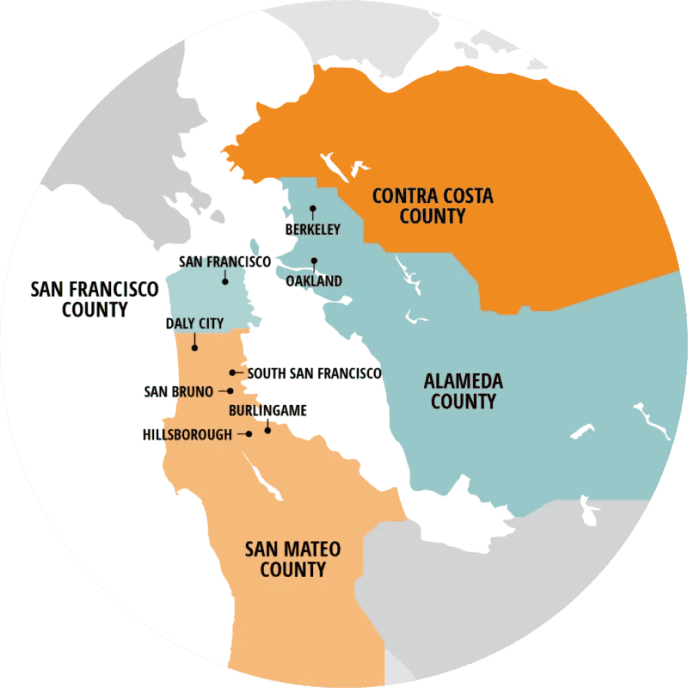
The Department of Veterans Affairs (VA) recognizes these needs and provides veterans home care funding in Berkeley, CA, to assist servicepeople and their loved ones. What many families don't realize is that long-term care options - including in-home care - are included in programs like ameriCARE's Veteran CARE services.


Today, many of our veterans are vulnerable to a variety of issues that can impact their quality of life. However, through our Veteran CARE services, we're able to provide customized, compassionate care that addresses those issues and provides families like yours with peace of mind. Whether they're returning from combat with new health challenges or simply need an extra hand throughout the day as they age, our team is here to help.
Our agency owners are dedicated to guiding veterans through the process of accessing their benefits and understanding their eligibility. This important service, available at many of our franchise locations, empowers veterans to overcome the often confusing world of entitlements. With empathy and expertise, we strive to honor veterans by delivering personalized care and knowledgeable guidance, supporting them in living fuller, more independent lives.

The VA offers valuable benefits that include coverage for home health aide and homemaker services to veterans who require help with daily living activities. Through collaboration with one of our care partners, we learned that, out of more than 8 million veterans in the VA healthcare system aged 65 and older, only about 150,000 are utilizing this support. This means fewer than 2 percent of eligible veterans are getting the care they've rightfully earned. In some cases, such as with "Aid and Attendance," surviving spouses of veterans may also be eligible for benefits.
ameriCARE is committed to linking veterans and seniors nationwide with compassionate, highly trained caregivers from their own communities. We're proud to say that our mission goes beyond care - in fact, we're happy to help guide veterans and their families through the complexities of the VA system, offering hands-on support during the entire approval process. Many of our franchise owners team members are veterans themselves, who are dedicated to ensuring you or your loved one receives reliable, personalized care at home.
Regardless of how long they served, many military veterans leave service with a litany of health issues - both mental and physical. Some of the most common problems that older veterans face after leaving the military include
Research from the National Center for PTSD reveals that as many as 23% of veterans will experience post-traumatic stress disorder during their lifetime. For some, symptoms may not surface until later years, often following retirement. Notably, the development or worsening of PTSD in older adults has been linked to an increased risk of dementia, suggesting a complex relationship between trauma and cognitive decline as veterans age.
A recent study featured in the National Library of Medicine examined the prevalence of malnutrition among older veterans receiving home-based primary care. The researchers discovered that 15% of these individuals were classified as malnourished, highlighting a significant health concern within this population. Malnutrition in elderly veterans can lead to a range of complications, such as weakened immune response, slower recovery from illness, and increased risk of hospitalization. These issues underscore the need for veterans home care funding in Berkeley, CA that helps seniors with eating and nutrition challenges.
Studies show that older veterans face a 25% higher likelihood of reporting multiple chronic health issues compared to their nonveteran peers. This trend underscores the unique health challenges veterans may encounter as they age, which often stem from service-related injuries, stress, and more.
Veterans often carry the weight of their service, having endured challenging circumstances and shouldered responsibility for the security of others. As they grow older, preserving their sense of independence becomes deeply intertwined with their mental and emotional health. For many, shifting from self-reliance to accepting help with everyday activities can be a significant adjustment.
A skilled caregiver who understands veterans' unique backgrounds can make this transition smoother. Building trust through respect for personal boundaries, clear communication, and trauma-informed care is essential to fostering a strong partnership between veterans and their in-home caregivers.
Many ameriCARE locations provide their caregivers with specialized training to better support our veterans as veteran cases can be complex and deserve tailored care.


Our caregivers offer support with meal preparation, grocery shopping, and managing dietary needs. They also encourage healthy habits and lifestyle choices, ensuring you or your loved one receives personalized nutrition and wellness guidance.
Tasks like bathing, using the restroom, getting dressed, and maintaining oral hygiene can become challenging because of aging or ongoing health conditions. Our dedicated caregivers are specially trained to assist with these personal routines and always prioritize the veteran's comfort, privacy, and self-esteem.
A tidy living space does more than promote good hygiene. It fosters a sense of comfort, security, and overall wellbeing. Our caregivers help with everyday household tasks, making sure your home remains a safe, inviting, and organized environment.
When driving becomes a challenge, whether for you or a veteran family member, our caregivers step in to help. They can handle errands such as grocery shopping, picking up prescriptions, ensuring appointments are kept, and providing reliable support for many other daily needs.
In-home caregivers from ameriCARE are dedicated to supporting your loved one's mobility and safety. From accompanying them on short walks to guiding them through physical therapy routines, we help promote regular movement and keep them engaged in activities that support their health and independence.
Our caregivers foster engagement by offering gentle support and uplifting encouragement. We create opportunities for veterans to participate in enriching activities, make social connections, and develop genuine bonds with their in-home caregivers.
We can accompany you or the older veteran in your life to medical appointments. We can also help relay any information or instructions provided by doctors.
Coping with the effects of aging, disability, or recovery from injury often involves juggling multiple medications with specific timing and dosages. Our caregivers can help ensure that you or your veteran loved one receives the correct medications at the right times, providing peace of mind while supporting overall health.
Our comprehensive care extends to beloved pets as well. We can assist with daily dog walks, feeding routines, arranging transportation for vet visits, and maintaining pet hygiene. By helping with day-to-day chores like pet care, we help enhance the wellbeing of senior veterans and their animal companions.
While many veterans have a primary care physician or a home health care professional, they may still need a real human connection beyond medical care. Veteran-funded home care can help you or your loved one maintain a more balanced life, one visit at a time. That's where ameriCARE comes in. We work tirelessly to connect dedicated, welltrained, and dependable caregivers to veterans across the United States.
If you're looking for a locally-owned home care company that provides veterans with personalized support, Request More Info today. It would be our honor to help you and your family navigate the VA and to act as your liaison throughout the benefit approval process.


Ready to get started on your journey with ameriCARE? Request More Info today to schedule your consultation and learn more information about how we can assist you or your senior loved one.
Quick SummaryTo become an AI engineer in Berkeley by 2026, follow a 12-month architectural blueprint that progresses from foundational math to deploying generative AI, emphasizing production-ready skills and ethical design. Leverage Berkeley's ecosystem, including access to UC Berkeley's research and a vibrant startup scene, where AI engineers earn around $180,634 annually. Commit to 1-2 years of continuous learning through hands-on projects and local networking to build robust applications for the Bay Area's demanding tech landscap...
To become an AI engineer in Berkeley by 2026, follow a 12-month architectural blueprint that progresses from foundational math to deploying generative AI, emphasizing production-ready skills and ethical design. Leverage Berkeley's ecosystem, including access to UC Berkeley's research and a vibrant startup scene, where AI engineers earn around $180,634 annually. Commit to 1-2 years of continuous learning through hands-on projects and local networking to build robust applications for the Bay Area's demanding tech landscape.
Before assembling any structure, you need the right foundation and tools. The path to becoming an AI engineer in Berkeley is not about following a checklist, but about developing the architectural judgment to design robust systems. As AI expert Nilay Parikh notes, the role has evolved; engineers are now needed as "architects, owners, guardians, negotiators, and inventors," with AI automating 60-80% of typical coding tasks.
You cannot architect stable systems on wobbly fundamentals. Start with high-school level algebra and a comfort for logical problem-solving. Recruiters now consider a basic understanding of AI as table stakes for engineering efficiency, not a "plus." This journey requires a growth mindset, as comprehensive mastery typically involves 1 to 3 years of dedicated learning and application.
Your initial setup is critical. Secure a modern laptop with at least 8GB of RAM and install Python (3.9+), VS Code, and Git. Immediately create accounts on GitHub for your portfolio and Kaggle for datasets. In the competitive Berkeley market, where AI engineers earn approximately $180,634 per year, structured learning accelerates progress. Consider leveraging local resources like the UC Berkeley's Professional Certificate in Machine Learning & AI, a top-rated 6-month program designed to build this essential foundation.
This phase is about pouring a solid concrete slab before you build. In Berkeley, where institutions like UC Berkeley and LBNL expect you to manipulate math "under the hood," skipping to high-level libraries is a career-limiting mistake. You must internalize the language of data and learning itself.
Python is non-negotiable, appearing in over 90% of AI engineer job postings. Focus on writing clean code and mastering data manipulation with NumPy and Pandas. A practical application is automating analysis of local datasets, like BART ridership or City of Berkeley open data. Structured local training, such as a foundational bootcamp, can efficiently build this core skill set over several months.
True architectural understanding comes from the math. This isn't about memorization, but application:
Resources like the AI Engineer Roadmap from Turing College emphasize that this foundation is what allows you to debug models and understand research papers, setting you apart in a demanding market.
Months 4-6 mark the transition from theory to construction, where you assemble your first functional models. This is where you learn to bridge mathematical concepts with functional software, using the core algorithms that power most commercial AI applications today.
Start with Scikit-learn, focusing on the "why" behind algorithm selection. A hands-on project, like predicting restaurant health scores in Alameda County, teaches you to implement and tune models. Follow structured guides like the AI Engineer Roadmap which details building ML pipelines and hyperparameter tuning with GridSearch.
Get comfortable with TensorFlow/Keras by building a simple neural network for a task like digit recognition. The critical leap, however, is deployment. Employers expect production-ready applications, not just Jupyter notebooks. You must learn to package your model into a Docker container and serve it as a live web API using FastAPI, deploying it on platforms like Render or Hugging Face Spaces.
As emphasized in resources like Codecademy's guide to becoming an AI engineer, this ability to build, containerize, and deploy is what transforms a theoretical model into a tool with real-world impact, a skill highly prized in the Bay Area's fast-moving startup environment.
This phase is where you move from general construction to mastering advanced materials and techniques. You're now tackling the cutting-edge architectures - computer vision, NLP, and transformers - that define the current AI revolution and make you competitive for specialized roles across the Bay Area.
PyTorch has become the framework of choice for modern model development. Dive into Convolutional Neural Networks (CNNs) for image tasks and Recurrent Neural Networks (RNNs) for sequential data. A practical application is building a CNN to classify local flora or fauna, using transfer learning from a pre-trained model to achieve better results with limited data - a common scenario in startup environments.
The transformer architecture is foundational to technologies like ChatGPT. Using the Hugging Face transformers library, learn to fine-tune a model like DistilBERT for a specific task. For a locally relevant project, you could analyze sentiment in Berkeley restaurant reviews or summarize local news. Resources like the AI Engineer Roadmap from Scaler detail this essential progression into transformer architectures and attention mechanisms.
⚠️ Warning: This material is complex. Leverage Berkeley's academic wealth by supplementing your learning with recorded lectures from UC Berkeley courses like CS 182 (Deep Learning). This direct access to world-class instruction, as highlighted by the Berkeley College of Computing, Data Science, and Society, is a unique advantage of learning in this ecosystem.
This final phase transforms you from a model builder into a product architect. By now, proficiency with Large Language Models (LLMs) and generative AI is table stakes. This step is about leveraging powerful pre-trained AI to create novel applications - the exact skill prized by Berkeley AI startups looking for "builders" who can launch quickly.
Move beyond API calls to building sophisticated systems. Master prompt engineering, Retrieval-Augmented Generation (RAG), and frameworks like LangChain. A compelling local project is building a RAG-based chatbot that answers questions about Berkeley municipal codes or an autonomous agent that plans itineraries using BART and event data. For those interested in the critical safety aspects, Berkeley offers specialized training like the AI Red-Teaming Bootcamp focused on security and ethical deployment.
Professionalize your workflow with MLOps: use MLflow for experiment tracking and set up CI/CD pipelines for automated retraining. Then, synthesize everything into an ambitious, deployable capstone product. An example is "BerkeleyBudgetBot," a full-stack app that uses an LLM to help residents query the complex city budget PDF. To guide this product-building phase, programs like the Gen-AI Bootcamp from Berkeley Startup Studio focus on launching AI-powered applications.
???? Pro Tip: As emphasized by UC Berkeley's College of Computing, Data Science, and Society, document the ethical considerations and limitations of your capstone. This foresight is highly valued by employers, aligning with the shift where engineers must act as responsible guardians and architects of AI systems.
Your progress isn't measured by completed checklists, but by the structural integrity of your skills. You've moved from assembly to architecture when your GitHub portfolio tells a story of evolution - from simple scripts to a deployed, full-stack AI application with professional documentation. As discussed in community forums like this Reddit thread on persuasive portfolios, employers look for projects that solve legitimate problems and demonstrate an understanding of model shortcomings.
True mastery is evident when you can articulate the "why" behind every technical choice - explaining gradient descent or your model selection - not just the "how" to implement it. This depth of understanding separates candidates in Berkeley, where research institutions and cutting-edge startups expect you to think critically about system design and failure modes.
Finally, integrate into the local ecosystem. Engage with the innovation culture by attending AI meetups in Oakland or San Francisco, accessible via BART, and follow research from institutions like UC Berkeley's College of Computing, Data Science, and Society. This engagement, combined with a builder’s mentality and a portfolio of deployed systems, positions you for success in a market where AI Engineers command an average salary of $180,634 per year in Berkeley.
Based on the typical learning path, it takes about 1-2 years of dedicated study and hands-on projects to become proficient. In Berkeley's fast-paced ecosystem, leveraging local resources like UC Berkeley courses or bootcamps can help you stay on track for 2026 opportunities, but continuous learning is key even after employment.
No, a degree isn't mandatory, but a comfort with basic algebra is essential as you'll dive into linear algebra and calculus. In Berkeley, where employers value deep understanding, focusing on math early helps you debug models and engage with research from institutions like UC Berkeley, setting a strong foundation.
The job market is robust, with AI Engineers in Berkeley earning approximately $180,634 per year on average. Opportunities range from startups in Oakland to tech giants in San Francisco, all accessible via BART, making it a competitive but rewarding field for skilled professionals.
Berkeley offers unique advantages like proximity to UC Berkeley and Lawrence Berkeley National Laboratory for cutting-edge research, a vibrant AI startup scene, and easy access to major employers like Google and NVIDIA via BART. This ecosystem provides abundant networking, venture capital, and learning opportunities that accelerate career growth.
Start with mastering Python programming, as it's required in over 90% of AI job postings, and set up tools like Git and VS Code. Then, focus on foundational math and data manipulation with libraries like NumPy to prepare for machine learning, which is essential for building applications valued by local employers.
BERKELEY - The California lacrosse team (4-6, 1-4 ACC) was defeated 20-3 by the nation's top-ranked team and defending national champion North Carolina (8-0, 6-0 ACC) in an Atlantic Coast Conference game on Thursday at California Memorial Stadium. The Tar Heels set a school record with their 30th straight victory that is also the nation's longest current win streak and the sixth-longest in the sport's history.North Carolina scored all 11 of the game's goals in the opening period and led 13-0 before got the Golden Be...
BERKELEY - The California lacrosse team (4-6, 1-4 ACC) was defeated 20-3 by the nation's top-ranked team and defending national champion North Carolina (8-0, 6-0 ACC) in an Atlantic Coast Conference game on Thursday at California Memorial Stadium. The Tar Heels set a school record with their 30th straight victory that is also the nation's longest current win streak and the sixth-longest in the sport's history.
North Carolina scored all 11 of the game's goals in the opening period and led 13-0 before got the Golden Bears on the board when she powered her way through a host of North Carolina defenders and found the back of the net for an unassisted goal with 5:20 to go in the second period.
North Carolina would score one more goal before halftime to take a 14-1 lead at the intermission and then all four of the game's third-period goals to extend its advantage to 18-1 heading into the final 15 minutes.
Cal's season points leader was able to pick a pair of goals in the final period with McMullen registering an assist on the second one before UNC wrapped up the game's scoring with the final two goals.
entered the contest at goalkeeper for Cal with the Bears trailing 11-0 at the end of the first quarter and posted a career-high-tying 10 saves, while limiting North Carolina to only nine more goals the rest of the way in a 45:00 outing that tied for the second-longest of her career.
Addison Pattillo led 11 North Carolina goal scorers with five, while Kiley Mottice (3 goals, 1 assist), Eliza Osburn (3 goals, 1 assist) and Chloe Humphrey (2 goals, 2 assists) each had four points and multiple-goal contests. Darcy Felter, Caroline Godine, Kaleigh Harden, Eva Ingrilli, Kate Levy, Payton Magday and Julia O'Connor added one goal apiece with Felter also picking up an assist.
Cal concludes its season-long four-game homestand on Monday with a nonconference contest against Marist (1-5). First draw is at 3 pm PT and the contest can be watched live on ACCNX/ESPN+.
BERKELEY – No. 15 California women's gymnastics scored a season-high 197.225 in Saturday's victory over Boise State (195.925) in Haas Pavilion to remain undefeated in its home venue. The Golden Bears outscored the Broncos on every event and saw Cal gymnasts sit atop the podium on all four events as individuals. Annalise Newman-Achee took gold in the all-around with a 39.375, continuing her streak of reaching the podium as an all-arounder in every competition this season.In the first rotation,...
BERKELEY – No. 15 California women's gymnastics scored a season-high 197.225 in Saturday's victory over Boise State (195.925) in Haas Pavilion to remain undefeated in its home venue. The Golden Bears outscored the Broncos on every event and saw Cal gymnasts sit atop the podium on all four events as individuals. Annalise Newman-Achee took gold in the all-around with a 39.375, continuing her streak of reaching the podium as an all-arounder in every competition this season.
In the first rotation, Casey Brown paced the Bears on vault with a 9.850 to win the event. Jayden Silvers matched her season high with a 9.825, with Kyen Mayhew and Tonya Paulsson each receiving the same score. Cal compiled a 49.125 as a team to edge ahead of Boise State at the end of the first rotation.
The Bears, who entered the meet ranked 10th in the nation on uneven bars, continued their success on the event, putting together a 49.425 to extend their lead over the Broncos at the midway point of the competition. Sage Melkonian stuck her dismount to match her personal best on bars with a 9.925. Paulsson won the event with her third overall and second-consecutive 9.950 on bars.
Melkonian stayed hot as the third rotation got underway, performing a career-high 9.900 on balance beam as Cal's leadoff routine. Sarah Lee kept it rolling with a 9.900 of her own, which matches her personal best and tied with Melkonian for the event win. Mayhew matched her career high and set a season high on the event with a 9.825. Cal held onto the lead over Boise State by a full point at the end of the rotation.
The Bears put together their strongest floor rotation of the season with a 49.425 to close out the victory. Newman-Achee recorded a 9.900, the highest floor exercise score of her collegiate career, before Mayhew and Paulsson each followed suit with the same score. All three stood atop the podium for the individual event win.
Cal will continue its homestand next week with two competitions in Haas Pavilion. The Bears will welcome Stanford and San Jose State in a tri meet on March 13 at 7:30 p.m. PT before hosting Washington, UC Davis and Pennsylvania for a quad meet on March 15 at 2 p.m. to close out the regular season.
STAY POSTED For further coverage of Cal women's gymnastics, follow the Bears on X (@CalWGym), Instagram (@calwgym) and Facebook (/calwgym/).
California-based Grocery Outlet plans to close dozens of its supermarkets as it charts a path out of financial difficulties.The Emeryville-based grocer on Wednesday announced it plans to close 36 stores over the next year as part of an "optimization plan.""We identified 36 stores in the network that we concluded did not have a viable path to sustained profitability," CEO Jason Potter said on the company's quarterly earnings call.Of those 36 to-be-closed stores, 24 are located in the eastern part of th...
California-based Grocery Outlet plans to close dozens of its supermarkets as it charts a path out of financial difficulties.
The Emeryville-based grocer on Wednesday announced it plans to close 36 stores over the next year as part of an "optimization plan."
"We identified 36 stores in the network that we concluded did not have a viable path to sustained profitability," CEO Jason Potter said on the company's quarterly earnings call.
Of those 36 to-be-closed stores, 24 are located in the eastern part of the U.S., where the retailer has recently expanded.
"It's clear now that we expanded too quickly, and these closures are a direct correction," Potter said.
Grocery Outlet has 570 stores across 16 states. Around half of its locations are located in California. Grocery Outlet is a discount grocery chain with a unique independent operator business model, which differs from typical franchises in that store managers profit-share with the company based on the store's performance over time.
The company has not identified where the 36 stores set to close are located. It's possible that some of the 12 non-eastern stores set to close are located in California.
Despite the planned closures, Grocery Outlet is also set to open new locations.
The company will open "another 30 to 33 net new stores in 2026," Potter said.
"We plan to expand with a more clustered model to improve supply chain efficiency and marketing leverage," he said.
Grocery Outlet saw net sales increase during the last quarter, up around 11% compared to the same time the year before. But it recorded an operating loss of $234.8 million.
Potter said increased consumer pressure and competition, along with disruptions to government assistance programs during last year's government shutdown were partly to blame.
Grocery Outlet isn't the only supermarket company eyeing closures.
Kroger, the owner of Ralphs and other chains, announced plans last year to close 60 stores.
Amazon in January announced it would close every single one of its Amazon Fresh and Go stores nationwide. Some of its dozens of California locations could be repurposed into Whole Foods Markets.
SEE ALSO:
This website publishes news articles that contain copyrighted material whose use has not been specifically authorized by the copyright owner. The non-commercial use of these news articles for the purposes of local news reporting constitutes "Fair Use" of the copyrighted materials as provided for in Section 107 of the US Copyright Law.

Learn more about becoming a franchise owner.
Each ameriCARE location is an independently owned and operated franchise.
The franchisor, ameriCARE, does not control or manage the day-to-day business operations of any ameriCARE franchised agency.