
If your parents are anything like ours, they've poured their hearts into creating a better life for you and their community. Now that they're in their golden years, they deserve to relax and savor the fruits of their labor.
However, as our loved ones age, the need for extra support around the home becomes evident, whether it's preparing meals or managing medications. When they can no longer care for themselves as they once did, worries about their safety and well-being arise. It's natural to think about their quality of life and how you can give back to them while balancing your own responsibilities.
Most seniors -94%, according to Forbes- prefer to remain in their homes as they age. If the senior in your life wants to stay at home as they get older, what's the best way to make that happen? For many families, non-medical home care offers a compassionate and affordable solution. In-home care is quickly becoming the first choice for older seniors because it supports your family while allowing your loved one to age gracefully in the familiar, safe surroundings they're used to.
If you're committed to keeping your mom, dad, or senior relative safe and happy at home, working with a home care agency might be the best way to achieve that goal.


When it comes to maintaining good senior health, early intervention is often key. Unfortunately, many adults with senior parents are stretched too thin to notice signs that their mom or dad needs help around the house. Wondering whether you really need to consider home care for you, your parents, or your loved ones? Keep these warning signs in mind.
As men and women get older, it's perfectly natural for them to have some aspects of mental decline. Age-related memory loss doesn't affect everyone, but when it involves your loved one, it can be a lot to digest. When forgetfulness begins to impact your parents' quality of life, it's time to take action.
Commonly referred to as mild cognitive impairment (MCI), this forgetfulness often arises from reduced blood flow to the brain, a phenomenon frequently associated with aging. Other contributing factors can include typical neural lapses and a decline in hippocampal function, which is a crucial area of the brain responsible for memory. These changes can lead to frustrating side effects, such as
Seniors showing any of these signs can greatly benefit from non-medical home care providers who can help them with their daily tasks. This support can include reminding them of scheduled appointments, preparing meals, light housekeeping, and assisting with reading and other essential activities. Professional caregivers can also incorporate healthy memory practices into your loved one's daily routine. Strategies may include social interaction, engaging in simple strategy games, maintaining a nutritious diet, and participating in light exercises like slow walks around the block.

As your parents or senior loved ones get older, they often have trouble completing dayto-day tasks that are fundamental to living a normal life. There are several activities of daily living, or ADLs, that senior citizens struggle with and include
A reliable caregiver from a trusted senior care agency in Stinson Beach, CA, can help make daily life much easier for your elder relative. If they have trouble putting on or tying their shoes, your caregiver is there to help them choose their shoes and put them on correctly.
If your senior citizen isn't eating healthy food, your caregiver can help create a nutritious meal plan and assist them in preparing the food they need for energy and daily activities. When searching for a home care agency, make sure they offer tailored care plans that address your loved one's needs, not someone who has similar issues.

If you notice that your loved one can't keep themselves clean and groomed, it could be a sign that their health is on the decline. It could also be a red flag that your senior may be experiencing the early stages of dementia. Other signs include:
The best non-medical caregivers are trained to attend to your loved one's needs and quality of life as they move through the Functional Assessment Staging test of Alzheimer's Disease, also known as the FAST Scale. If you believe your parent or relative might be in the early stages of dementia, it's absolutely critical to work with a home care business like ameriCARE that specializes in dementia care.

There's a reason why almost 12 million people in the United States rely on some type of non-medical home care. Working with the right home care agency and team caregivers can be life-changing for seniors who need help but don't want to live in a nursing home. Here are just a few of the most effective services that help older adults stay happy, healthy, and active as they age.
If you notice that the senior in your life can't or won't maintain their hygiene and health, hiring an experienced caregiver can help. They'll assist with daily tasks like:

Companion home care is a unique type of in-home support tailored for individuals who require help with daily living tasks while also benefiting from meaningful social interaction and emotional support. Unlike other care options that primarily focus on medical or personal needs, companion and lifestyle home care helps form strong personal bonds and improves the overall quality of life.
People who benefit the most from companionship and lifestyle home care include:

Veterans are a special breed. They're service members who have made sacrifices for our country and deserve dignified, respectful attention. In-home care gives Veterans customized, compassionate care when they need it most. Whether they have new health challenges after returning from combat or need an extra hand throughout the day, home care can make a meaningful difference for those who deserve the utmost respect and compassion.
In-home care can be very helpful for Veterans suffering from:

Taking care of someone with Alzheimer's can be quite challenging, as it involves managing a mix of complex and changing needs. Those living with the disease may face memory problems, mood swings, and difficulties in communicating. Alzheimer's care includes various services aimed at providing a supportive environment that helps maintain both physical and emotional well-being, even as the disease evolves.
Common Alzheimer's care services include:

Giving the older adult in your life the gift of in-home care can be a hugely positive decision on multiple levels. It not only gives them access to high-quality care in a place where they feel comfortable - it gives them the independence they crave and have earned over their lifetime.
Some of the most significant advantages of hiring a home care agency to help your senior loved one include:

Great in-home caregivers support your loved one's independence while providing the necessary assistance to ensure their safety and well-being. When you choose an agency that creates tailored care plans, your loved one can continue to live their lives on their terms, making choices about their daily activities and routines with the support of caregivers.

Receiving care at home offers a unique set of benefits that facility settings just can't match. Home care companies like ameriCARE offer personalized care services designed to cater to specific needs while allowing seniors to stay in the comfort and familiarity of their own homes.

Choosing non-medical home care in Stinson Beach, CA, can be a cost-effective solution, especially when compared to long-term, residential options like nursing homes. Care provided in facilities typically incurs significant costs for lodging and extra services. On the other hand, home care enables clients to receive tailored support at a much lower price.

Having you and other members of your family involved in your loved one's care process is integral. If you're on the hunt for a home care agency to work with, make sure to choose one that encourages your involvement. This collaborative approach allows for care that aligns with your family values, expectations, and overall goals.

When you work with a senior care agency that carefully selects caregivers and provides ongoing training to provide a range of services, your parent or relative benefits greatly. ameriCARE caregivers are seasoned professionals, dedicated to serving others in ways that often go unnoticed.
We know that choosing the best senior care agency for your loved is a top priority. Some key factors to consider include:
The agency you choose should have a proven track record and should be transparent when talking about caregiver credentials, training, and programs.
Working with a home care company that pushes open communication, transparency, and responsiveness keeps everyone in your circle informed about care plan updates and adjustments.
Look for a company that offers a robust range of senior care services and provides custom care plans that meet your senior's unique needs.
Inquire about the agency's caregiver recruitment process, including background checks, screening procedures, and ongoing training.
By taking these factors into account, you can make a well-informed choice when selecting a home care agency that provides the quality, compassion, and support necessary to improve the well-being and comfort of yourself or your loved one.
At ameriCARE, we understand that in-home care should reflect the individuality of those we assist. Our guiding principle focuses on creating a caregiving experience that is tailored, uplifting, and impactful. We aim to broaden and strengthen your care circle.
Our dedication to conscientious in-home care has helped establish our reputation for outstanding service. We believe that non-medical in-home care holds the potential to sustain and enrich one's quality of life, regardless of the challenges a person faces. By adopting a holistic perspective on care, we ensure our services are thorough, nurturing, and beneficial to our clients' overall wellness.
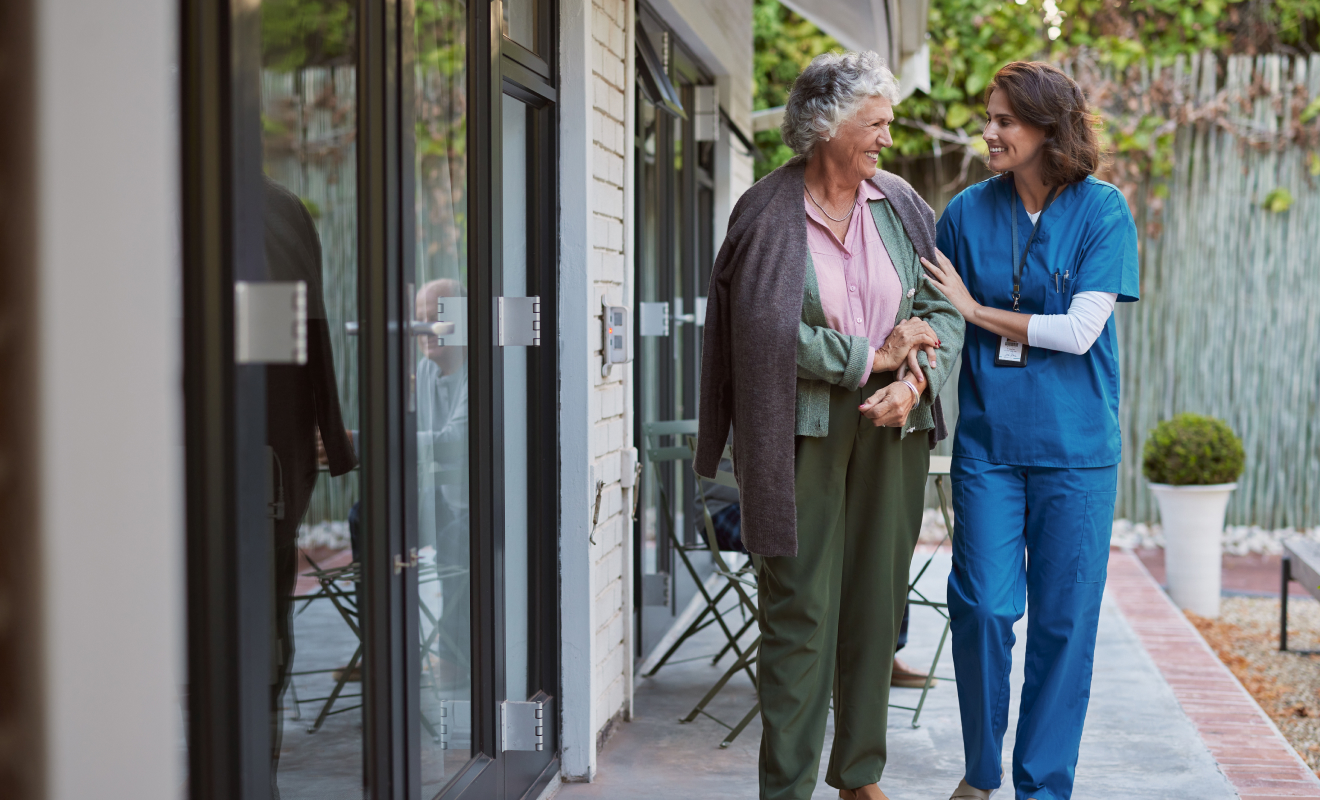
At ameriCARE, our goal is to deliver caregiving that is reliable, compassionate, and respectful. We are committed to positively influencing the lives of those we assist by making certain that our care is more than just a service - it's a source of comfort and empowerment. We aim to foster an atmosphere where each person feels appreciated, supported, and honored, thereby enhancing their capacity to live while improving their quality of life.
Our agencies are at the forefront of a new kind of in-home care that extends beyond traditional services. Unlike some home care companies, we believe in addressing the needs of the whole person.
To that end, we see care as a collaborative effort. Our caregivers are dedicated professionals who serve others in often unrecognized ways. We honor their commitment by providing top-notch training and career opportunities, ensuring they have the skills and support necessary to deliver exceptional care.
By going above and beyond to provide care that exceeds your expectations, we help ensure the best possible outcomes for you and your family. Seniors, their adult children, and other relatives choose ameriCARE because we're committed to:

Our care plans are customized to address the specific requirements of every individual and their family. We consider personal preferences, health issues, and family relationships to deliver care that is both personal and impactful.

We utilize cutting-edge technology to enhance your home care experience. With straightforward booking and payment methods, along with real-time updates and feedback, our technological solutions simplify and optimize care management.

If you're looking for help after surgery, a break from caregiving, or just someone to keep you company, our trustworthy caregivers are here for you. We provide a free care assessment with no strings attached to help you develop a home care plan that's just right for you.

The first step to seeing your loved one happy at home is to call ameriCARE for a free, no-obligation care assessment. Let us help you create a home care plan that brings your family peace of mind, comfort, and support. Request More Info today, and by tomorrow, you'll be closer to keeping your loved one safe and comfortable, no matter how many miles you may be apart.


Ready to learn more or need personalized support? Contact ameriCARE today! Our dedicated team is here to answer your questions, provide expert advice, and guide you through every step of the homecare journey.
One of the Bay Area’s most expensive enclaves relies on a two-lane road that will be covered by rising seas in the coming decades. A powerful homeowners group says the county must protect the road into the future — or be liable for billions of dollars of inaccessible real estate.Calle del Arroyo in Stinson Beach runs half a mile from Highway 1 to the gated community of Seadrift. It’s the emergency access and tsunami evacuation route for about 500 homes both in Seadrift and on the town’s narrow beachfront lanes....
One of the Bay Area’s most expensive enclaves relies on a two-lane road that will be covered by rising seas in the coming decades. A powerful homeowners group says the county must protect the road into the future — or be liable for billions of dollars of inaccessible real estate.
Calle del Arroyo in Stinson Beach runs half a mile from Highway 1 to the gated community of Seadrift. It’s the emergency access and tsunami evacuation route for about 500 homes both in Seadrift and on the town’s narrow beachfront lanes.
A recent Marin County sea level rise report for Stinson Beach recommended the road, which is county-owned, be raised soon, because it’s often impassable during annual king tides now and is expected to flood during major storms by around 2050, when storm surge swells the lagoon, and during monthly high tides by around 2060 to 2075.
Just who is responsible for fortifying Calle del Arroyo in the long term has become a contentious topic in the unincorporated vacation town. The issue is harder to ignore after record high tides and flooding hit Marin in early January, probably exacerbated by sea level rise. It’s part of a broader debate across the Bay Area over who will pay to shore up public infrastructure, and which communities should benefit from government funding, as aging roads as well as utilities, airports and levees are pushed past the breaking point with climate change.
In recent years, Marin County has sent mixed messages about the extent of its responsibility for Calle del Arroyo as the climate changes, at one point suggesting that it would no longer be required to maintain it if coastal hazards made it no longer feasible. The county withdrew that proposal. But months later, the Seadrift Association, representing the community’s roughly 300 homeowners, threatened the county in a letter to the Board of Supervisors with “billions in liability” if it abandoned the road.
“I look at this and think, ‘Wow, the value of the real estate in Stinson Beach that is accessed by Calle del Arroyo is enough to bankrupt Marin County,’” said Michael Wara, a legal expert who directs the Climate and Energy Policy Program at Stanford University.
Calle del Arroyo has flooded for decades, both near its intersection with Highway 1, where Easkoot Creek overflows during heavy rainfall, and at its western end at Seadrift, which is located between the Pacific Ocean and Bolinas Lagoon, said Fire Chief Jesse Peri. During king tides, Peri assigns personnel to park on its western end in case a medical emergency occurs when the area is cut off, and has a boat ready to ferry patients across the flood zone.
The preliminary estimate to raise the road is $22.8 million over two decades-long phases. That’s not a huge sum compared with other infrastructure projects, but it would be a complex undertaking because the road is connected to utilities as well as to private roads and driveways that will probably need to be raised along with it, said Robin Bartlett, principal civil engineer with Marin County’s Department of Public Works.
Other Stinson roads also need protection against sea level rise, and the total — including Calle del Arroyo — comes to $53 million, or “over $100,000 per coastal property if distributed evenly,” the Stinson Beach sea level rise report stated.
Loading...
The legal issues around Calle del Arroyo apply to many other seaside roads in the Bay Area and California, said Wara, who is also a land-use attorney as well as a Marin County resident whose parents own a home in Seadrift.
Typically, state law prohibits municipalities from abandoning public roads. If a county or other local government “abandons” or allows a public road to become impassable, homeowners can sue for the value of homes that are no longer accessible or diminished in value, known in legal circles as inverse condemnation.
But things may be changing, Wara said. In 2020, California’s Third District Court of Appeal held up an earlier dismissal of an inverse condemnation claim made by Lake Tahoe homeowners against Placer County over their access to a public road. The main reason was that their lots were on private roads and did not abut the public road.
“The decision may have changed the legal framework,” Wara said.
Stinson Beach’s situation is different in many ways, but it does involve homeowners on private roads that lead to the public Calle del Arroyo. The homeowners would have to overcome that legal precedent if they tried to sue Marin County, he said.
Wara also pointed to new Marin County planning codes requiring those seeking a new building permit in vulnerable parts of the bay shoreline to sign a waiver of liability if the county one day can’t maintain roads because of sea level rise.
Also, budgets only stretch so far, and the county needs at least $17 billion to protect itself from the 2 feet of sea level rise expected toward the end of the century, according to the San Francisco Bay Conservation and Development Commission. That’s about $65,000 per county resident.
In an email to the Chronicle, Bartlett of the Department of Public Works said Marin County would be responsible for pursuing and managing funding for any roadway improvements on Calle del Arroyo, as well as for maintaining and improving it as needed, “based on available resources.” Those resources could include the county general fund and grants — which are competitive, so funding is not guaranteed, she said.
“Any work — such as elevating the roadway — would be considered in the context of overall maintenance needs and funding availability across the county’s entire road network,” she said.
The county sent a starker message in 2024, when it released a draft public planning document for development in the coastal zone under certain hazardous situations. It said “permittees” — or those seeking building permits, including for substantial remodels — would have to remove their houses and restore the area if roads and utilities could no longer “feasibly be maintained due to coastal hazards” and named Calle del Arroyo as an example.
It also said the county “shall not be required to maintain access” for such development under those conditions.
The document caused an uproar when it was presented at a Stinson Beach public meeting, said Jeff Loomans, a Seadrift resident who is now director at the Stinson Beach Village Association, where he serves on the long-range planning committee.
Sarah Jones, director of Marin County Community Development Agency, said in an email that the measures that were included in the draft document “reflect strategies that are being considered, and in some cases have been applied, throughout the county.”
However, they don’t signal any intent about long-term maintenance or improvement, because decisions on infrastructure and protection or restoration of developed areas haven’t been made, she said.
“We’re managing expectations about the county’s role with new development that we’re permitting in these areas,” she said. “Our planning for the future has to account for what we know could happen down the road.”
The county put the draft planning document on hold the next year due to other concerns raised by the Coastal Commission. But that summer, the county issued its Stinson Beach sea level rise report that made clear that the community would have to take the lead on planning and securing funding to protect its shoreline, to the tune of $1.2 billion.
Two months later, the Seadrift homeowners association wrote its letter to the Marin County Board of Supervisors.
“The burden of implementing solutions to the collective problem of sea-level rise must be borne collectively, and not placed disproportionately on individual property owners and coastal communities like Seadrift,” wrote Dyer Grote, the president of the association. Grote also said that the county is responsible for repairing and preventing damage to public streets and infrastructure, such as Calle del Arroyo.
“Abandoning Calle del Arroyo to the rising seas, for example, would expose the county to billions in liability from Seadrift homeowners who would lose access to their homes,” she said.
Jones said in an email that the Stinson Beach study did not draw any conclusions on which projects will be pursued and who will bear the costs.
“There is a lot more to consider, about all of the communities in Marin subject to sea level rise impacts, before we decide what types of projects to pursue and where,” she said.
Last year, Stinson Beach was among the nation’s top 10 most expensive ZIP codes for homebuyers, a status it also reached in 2023, according to the real estate data website Property Shark. Another area of Marin, San Rafael’s Canal District, is considered the most vulnerable community to sea level rise in the Bay Area and is also one of the county’s most diverse and low-income areas.
“I can’t argue that there’s not a potential equity issue. If you look at something like the Canal District it has a more urgent need,” Loomans said. “But ultimately it’s the county’s responsibility.”
Grote said that she stands by her original statement. She said the road is also used for access and parking by visitors and that not all of the town’s residents are wealthy.
Stinson Beach and Seadrift home owners “reasonably expect that their property taxes will go to maintenance of public access roads like Calle de Arroyo,” she said in a text message. “The county cannot legally turn a blind eye to a matter of fundamental safety.”
Stinson Beach could create a special assessment or parcel tax to help cover upgrades to Calle del Arroyo and other roads. Such special districts already exist in the community. Stinson’s fire station — which is just as busy in winter with flooding events as it is in summer with fires — is moving from being volunteer-run to a mostly professional staff with the help of property tax revenue from parcels in Stinson Beach, Peri said.
The town is building a new firehouse, with the majority of funding coming from the community, he said.
It was designed, Peri said, “to combat obstacles, with climate change bringing fire to places that it normally hasn’t been in and water into areas it normally hasn’t been in.”

This website publishes news articles that contain copyrighted material whose use has not been specifically authorized by the copyright owner. The non-commercial use of these news articles for the purposes of local news reporting constitutes "Fair Use" of the copyrighted materials as provided for in Section 107 of the US Copyright Law.

Learn more about becoming a franchise owner.
Each ameriCARE location is an independently owned and operated franchise.
The franchisor, ameriCARE, does not control or manage the day-to-day business operations of any ameriCARE franchised agency.